Landscaping Colorado Springs: Working With Slopes & Soil
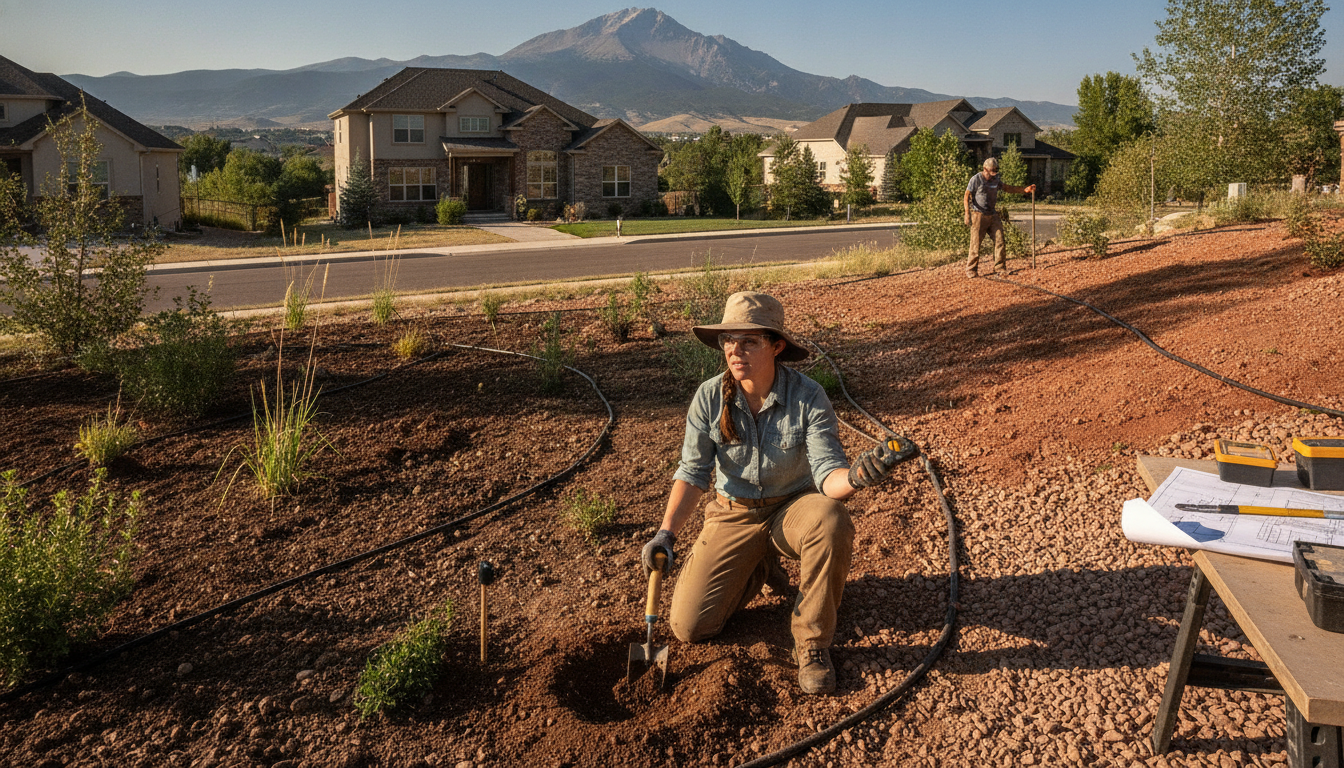
Every Colorado Springs neighborhood has its own soil and slope quirks. See how local landscapers plan around them for a yard that lasts.
If you've ever compared notes with a neighbor a few miles away, you already know: no two yards in this region behave the same. Landscaping Colorado Springs homeowners actually enjoy takes more than picking pretty plants — it starts with understanding the ground beneath your feet and the way your particular lot sits on the land.
From the sandy, fast-draining soil in parts of Black Forest to the dense clay found in older Colorado Springs neighborhoods, and from gentle Tri-Lakes slopes to the steeper grades common in Woodland Park and the foothills, every property brings its own set of considerations. Here's what we think about before a single shovel goes in the ground.
Why Soil Type Changes the Whole Plan
Colorado Springs sits at the meeting point of several soil types, and it's common to find clay, sand, and rocky decomposed granite within just a few miles of each other. Clay-heavy soil holds water and can stay soggy near foundations, while sandy soil drains so quickly that plants can dry out fast, even after a good rain. Neither is a problem on its own — but a landscape design built without accounting for it can lead to struggling plants, erosion, or drainage headaches down the road.
That's why a thoughtful landscape design in Colorado Springs starts with actually looking at your yard's soil, sun exposure, and drainage patterns before recommending plant choices, hardscape materials, or irrigation approaches.
Clay Soil Neighborhoods
Many established Colorado Springs neighborhoods sit on heavier clay soil. It's fertile, but it compacts easily and drains slowly, which matters a lot when you're planning patios, retaining walls, or garden beds close to the house. Proper grading and soil amendment go a long way toward preventing pooling water and protecting your foundation.
Sandy and Rocky Terrain
Areas with sandier or rockier soil, more common toward Black Forest, Falcon, and Peyton, need a different approach. Water moves through quickly, so irrigation timing and plant selection matter more than volume. This is often where xeriscaping in Colorado Springs really shines, since drought-tolerant, native plants are naturally suited to these faster-draining conditions.
Slopes Change the Rules Too
Beyond soil, elevation and grade play a huge role in how a yard should be designed. A flat lot in Fountain or Security-Widefield has very different needs than a sloped property in Manitou Springs or the Tri-Lakes foothills near Monument and Palmer Lake.
Managing Runoff on a Slope
Sloped yards need intentional planning for water runoff, especially during Colorado's sudden summer downpours. Retaining walls, terracing, and strategically placed plantings can help slow water down, reduce erosion, and keep it from pooling where you don't want it — around a patio, along a walkway, or near the foundation.
Flat Lots and Drainage
Flat properties have their own quirks. Without natural grade to move water away, drainage has to be built into the design itself, whether that's through subtle grading, French drains, or smart placement of hardscaping and plant beds.
Designing With Your Neighborhood in Mind
Whether you're in a newer Douglas County development like Castle Rock or Castle Pines, an HOA community with specific landscaping standards, or a long-established Colorado Springs neighborhood, your landscape design should reflect both the character of the area and the practical realities of your specific lot. That's part of why landscape installation in Colorado Springs isn't a one-size-fits-all process — the right plan for your street might not be the right plan for one just a mile away.
Getting It Right From the Start
The good news is that none of these challenges are reasons to avoid a beautiful yard — they're just things a knowledgeable local landscaper accounts for from day one. At S&C Landscaping, we're family-owned and operated by Simeon and Chris, who bring 15 years of combined experience working with the soils, slopes, and microclimates found throughout this region. We look at your yard's unique conditions before recommending a design, so what gets installed is built to thrive here, not just look good on paper.
If you're curious what your own yard's soil and slope mean for your landscaping options, we're happy to take a look. A free on-site consultation is the easiest way to get answers specific to your property, share your name, phone, email, and a little about your project, and we'll follow up to schedule a visit.
Frequently Asked Questions
How do I know what type of soil I have?
A simple way to get a sense of it is to dig a small hole after watering and see how quickly it drains, or note whether your soil feels gritty (sandy) or sticky when wet (clay). During a consultation, we can take a closer look at your yard's specific conditions and factor that into any design or planting recommendations.
Does a sloped yard limit what I can do with landscaping?
Not at all — sloped yards can be some of the most visually striking properties once terracing, retaining walls, or tiered plantings are used to work with the grade instead of against it. It just takes a design that accounts for drainage and stability from the start.
Do you serve neighborhoods outside of Colorado Springs proper?
Yes. We serve a 35-mile radius around Monument, which covers Colorado Springs, the Tri-Lakes area, Black Forest, Falcon, Peyton, Fountain, Security-Widefield, Manitou Springs, Woodland Park, and north into Larkspur, Castle Rock, Castle Pines, Sedalia, and Franktown. Not sure if you're included? Send us your city or ZIP and we'll confirm.